
The Beasant Family of Melcombe Regis: Tragedy at Sea and the Value of Newspaper Archives
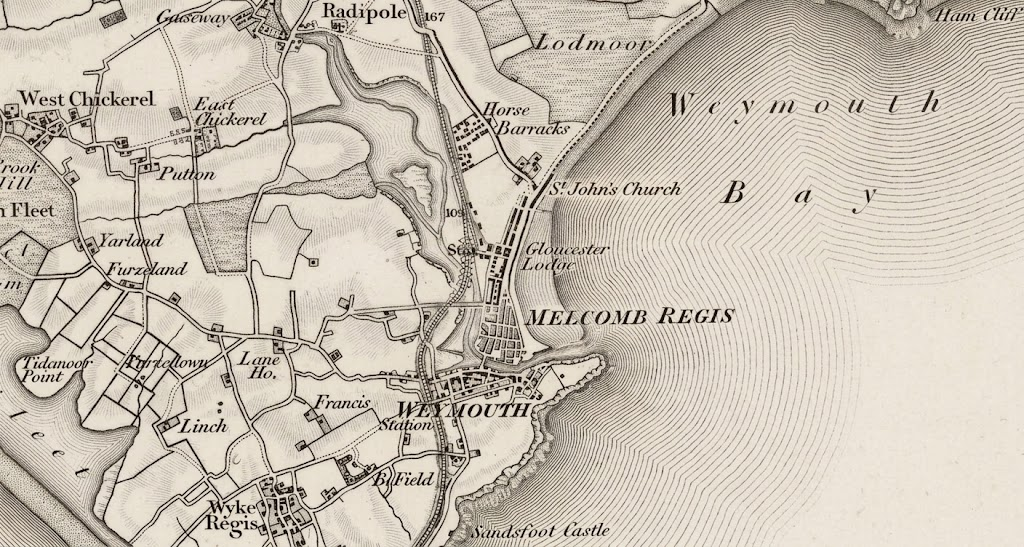
The Beasants of Melcombe Regis, Dorset, were no strangers to the sea. In this coastal town near Weymouth, members of the family worked as coal porters on the waterfront, ran local alehouses, and served both in the Royal Navy and the Merchant Navy. Their lives were closely intertwined with the maritime history of the town.
Christopher Beasant was baptised in Melcombe Regis in 1813, the son of Walter and Martha Beasant.
At the age of 22, he enlisted in the Royal Navy, entering service in 1836. During his naval career he served aboard vessels including HMS Bellerophon and HMS Stromboli, and worked as both a boatman and coastguard. His service earned him the Naval General Service Medal for operations in Syria in 1840 and the Crimea Medal for service during the Crimean War.
In 1847, Christopher married Eliza in Innishargie, County Down. By this time he was serving in the Coastguard, and the family settled for a period in Cushendun, County Antrim. Christopher remained in the Coastguard Service until his retirement in 1870.
Christopher and Eliza had 6 children – Christopher, Hugh Charles, Walter William, Elizabeth Ann, John James and Samuel.
Christopher Beasant junior joined the Royal Navy on 1 Jan 1873 at the age of 23, and served until 27 Aug 1887. At some point after this, he ends up serving as an officer in the Chinese Navy as a Torpedo Instructor. He died of dysentery at Wei-Hai-Wei, China, on 6 September 1893. He left a staggering £1190 in his will to his brother, John James who was a shipwright.
Another son, Walter William, was indentured as an apprentice into the Merchant Navy at the age of 15 on 6 Sep 1869 in Greenock, Scotland. He steadily progressed through the ranks, obtaining his Second Mate’s Certificate in 1875, followed by a First Mate’s Certificate on 19 October 1878. By 1880 he had earned a Master’s Certificate, qualifying him to command merchant vessels.
He was married on the 18th May 1883 by special license at 8am, at the parish church of Cushendun, to Lizzie Ross.
As the story goes, Walter had to leave later that day for Greenock, where he was to take over command of the ship Trinidad, which sailed for Batavia in the Dutch East Indies. The ship was loaded with Rum and Sugar and sailed again from Batavia for Greenock on the 10th October 1883, but was never heard from again.
While official records can tell us when people were born, married and died, newspapers often reveal the human stories behind those events and preserve family memories that might otherwise have been forgotten.
Source: Ballymena Weekly Telegraph, Saturday, 24 June 1933